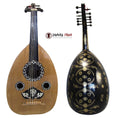
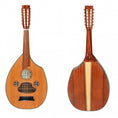
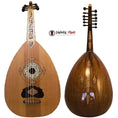
The Balalaika Prima measures approximately 27 inches in total length and features a 430 mm scale length. It has the traditional triangular body shape, with a slightly arched back crafted using stave construction in walnut, giving it both strength and resonance.
The balalaika is tuned above middle C to A-E-E (1st to 3rd strings). The first string is the thinnest and extends over more frets than the second and third strings. Tuning can be done using a piano or electronic tuner, and string tension may be adjusted by tightening or loosening the screw located at the top of each tuning peg.
To play, the left hand fingers the strings while the right-hand index finger strums near the neck, high on the soundboard. The walnut veneer on the soundboard is not only decorative but also serves to protect the surface from repeated strumming.
This instrument includes a gig bag and pick.
The balalaika is believed to have evolved from the Oriental dombra, an instrument still played today in Kazakhstan. Knowledge of the dombra likely spread to Russia through Mongol trade routes and conquests. Over time, the instrument underwent structural changes and was adopted into Russian folk culture. The balalaika is often said to reflect the Russian spirit, capable of shifting effortlessly between joy and melancholy. Traditionally, it accompanied peasant ballads that often humorously criticized authority, which at times led to the instrument being banned by both the Orthodox Church and the state. Its peak popularity as a folk instrument occurred in the early 18th century.
In the late 19th century, the balalaika underwent significant development, including the standardization of its iconic triangular shape. Vassily Vassilievich Andreyev is credited with transforming the balalaika from a folk instrument into a concert instrument. His ensemble, later known as the Great Russian Imperial Balalaika Orchestra, introduced the balalaika to audiences beyond Russia. The instrument also spread internationally as Russians emigrated during periods of war, carrying their musical heritage with them.