- No products in the cart.










The Darbuka: The Pulse Behind the Music

26
Mar
There’s something instantly captivating about the sound of a darbuka.
It doesn’t just keep time—it moves the music. Whether it’s a fast, intricate solo or a steady groove beneath a melody, this small goblet-shaped drum has a way of pulling listeners in.
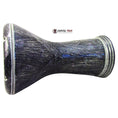
The darbuka has been played for centuries across the Middle East, North Africa, and beyond. While its design is simple—a narrow waist with a wide head—its expressive range is anything but. With just a few basic strokes, players can produce deep bass tones, sharp snaps, and a wide spectrum of textures in between.
A World of Variations: The Darbuka Across Cultures
Let’s take a quick dive into different regions and traditions to see how the darbuka has evolved, adapting its sound and design to fit local musical styles.
Egyptian Tabla (Darbuka)
When talking about the history of the darbuka, you have to start with Egypt. There, it’s commonly known as the tabla, a name often used interchangeably with darbuka.
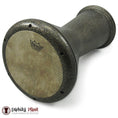
The Egyptian version has a few distinct traits compared to other Middle Eastern styles. While it was traditionally made from clay, modern versions are frequently crafted from metal. It also tends to have a wider head, which helps produce the deep, resonant bass tones it’s known for.
Turkish Flat-Head Darbuka
Turkey brings its own variation to the darbuka, featuring a flat rim that sets it apart from the more rounded Egyptian design. This shape allows for quicker finger work and greater control, producing crisp, articulate tones. The result is a sound that’s sharp, clean, and highly detailed—perfect for fast, expressive playing.
Often decorated with intricate, hand-crafted engravings, Turkish darbukas are not only instruments but also striking pieces of art.

Modern Doumbek/Darbuka
As the darbuka made its way into Western countries, it became widely known as the doumbek, especially in North America.
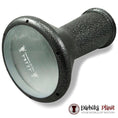
Mostly made in Egypt and Turkey these days, the modern darbuka/doumbek is probably closest to the original Egyptian darbuka in design. Over time, however, it has been altered in several ways to optimize tone and playability. Ranging between 17" (standard size), 18.5-19" (sombaty) and 21" (sombaty XL) long, this drum is the most common nowadays and the one most people would associate with the word "darbuka".
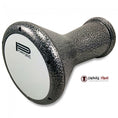
Modern darbukas have kept their classic shape but improved almost everything else. Instead of fragile clay, most are now made from aluminum or copper, making them more durable, lighter, and better suited for travel and live performance.
One of the biggest changes is the use of synthetic drumheads with tuning bolts. Unlike traditional natural skins, these heads are stable in different climates and can be easily adjusted, giving players consistent sound and control.
Design has also become more player-friendly, with smoother rims, better balance, and lighter weight, allowing for faster, more comfortable playing.
While some musicians still prefer the warmer tone of traditional clay and natural skin, modern darbukas offer reliability and precision—making them the go-to choice for many performers today.
