- No products in the cart.










The Right Way to Choose Your First Darbuka

30
Jun
Picking your first darbuka doesn't have to be overwhelming. A handful of clear decisions — body type, size, and rim profile — will point you straight to the right drum. This guide walks through each one, with direct links to the models we recommend most.
⚡ Quick Picks by Player Type
For Beginners 
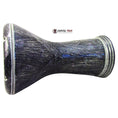
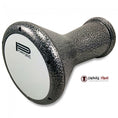
Egyptian Metal Solo Darbuka — 17″
Rounded rim, deep warm bass, forgiving on the fingers from day one. The go-to choice for Arabic music and world rhythms.
Shop Egyptian 17″ →
For Beginners 
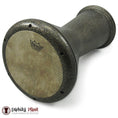
Turkish Solo Darbuka — 17″
Bright, snappy tone and the exposed rim that defines the Turkish finger-roll technique. Ideal for Balkan or Turkish styles.
Shop Turkish 17″ →
Serious Beginners 
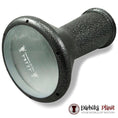
Zaza Horizon Sombaty — 18.5″ / 9″ Head
More projection, deeper bass, competition-level build. If you know from day one that you're serious — this is your drum.
Shop Zaza Horizon →
Serious Beginners 
Gawharet El Fan Sombaty — 18.5″ / 9″ Head
Cairo-made, hand-tuned sombaty with a full 9″ head. Rich, projecting low end for ensemble and solo work alike.
Shop Sombaty →
🥁 Egyptian vs. Turkish — What's the Difference?
"Darbuka" is one name for several closely related drums. The body material and rim profile change what the drum sounds like and what music it suits.
| Feature | Egyptian Darbuka | Turkish Darbuka |
|---|---|---|
| Rim style | Rounded, smooth — kind to the hand | Sharp, exposed — enables finger-roll technique |
| Tone character | Deep, fat bass (dum) · warm mid tones | Bright, crisp snap · articulate highs |
| Best for | Most beginners · Modern Arabic music | Turkish, Balkan styles · split-finger technique |
| Learning curve | Forgiving from day one | Sharp rim takes a month to get comfortable with |
| Shell | Cast aluminum — heavier, more resonant | Aluminum — light and bright |
💡 Our recommendation: If you're unsure, start with the Egyptian style. The rounded rim is comfortable immediately, and the deep bass tone works across almost every genre — Arabic, Latin fusion, world music, and beyond.
📏 Size Matters
Darbuka sizing refers to the drum's total length and, more importantly, the head diameter. Here's how the two main sizes compare:
Solo Size — 17″ length · 8.62″–8.75″ head
The standard starting point. Light enough to hold comfortably for long practice sessions, with a bright, punchy tone that cuts through in a mix. Both the Egyptian classic solo (8.75″ head) and Turkish classic (8.62″ head) fall into this category. Perfect for learning technique and for most performance contexts.
Sombaty Size — ~18.5″ length · 9″ head
Slightly larger body and a wider head produce a noticeably deeper voice with more projection and a fuller low end. The preferred choice for ensemble accompaniment — it sits lower in the mix and fills space a solo drum can't. We carry it from both Gawharet El Fan and the premium Zaza Horizon line.
Rule of thumb: Start with solo size if you want to focus on technique. Step up to sombaty if you know from the start that you want to play with other musicians or in a band setting.
🔍 What Makes a Quality Darbuka?
Three things separate a tourist-shop drum from a professional instrument: shell construction, head quality, and tuning hardware.
- Shell — Cast vs. Spun Aluminum. Cast aluminum (one solid pour) is heavier and significantly more resonant than spun or pressed aluminum. If the drum feels hollow or thin when you tap the body, that's spun. Cast drums hold their shape and tone for years.
- Head — Tunable Synthetic. Tunable synthetic heads (Mylar, fish-skin synthetic) hold pitch across humidity changes and travel well. They're the right choice for most players — consistent, durable, and easy to replace if needed.
- Tuning Lugs — Count Them. Six lugs is the working minimum for Egyptian style; eight gives more even tension and better tuning stability, and is the minimum standard for a Turkish darbuka. Look for clean threading and lugs that turn smoothly with the included key.
- Rim Finish — Especially for Turkish. On a Turkish darbuka the rim must be smooth and well-radiused. A rough or sharp rim will bruise your fingers within the first hour of practice and slow down learning dramatically. Always check the rim finish before you buy.
📜 A Short History of the Darbuka
"The goblet drum is one of the oldest known instruments — clay versions appear in Mesopotamian tombs from at least 1100 BCE, and the basic shape has barely changed in three thousand years."
The instrument spread across the Arab world, Anatolia, Persia, the Balkans, and North Africa, picking up local names along the way — darbuka, doumbek, derbake, tabla, zarb, tombak — and local techniques to match each culture's musical needs.
The modern aluminum-shell darbuka emerged in mid-twentieth-century Egypt: Cairo workshops adapted the traditional clay form to a lighter, weather-stable metal body. Players like Hossam Ramzy and Misirli Ahmet — the architect of the modern split-finger Turkish technique — have pushed the instrument well beyond its folk-accompaniment roots into world music, jazz fusion, and contemporary solo performance.
Whatever brought you here — a YouTube video, a live show, or the sound of a drum you couldn't identify — you're joining a tradition that stretches back thirty centuries and is still very much alive.
Questions about which model is right for you? Contact us — we're players too and happy to help.