- No products in the cart.


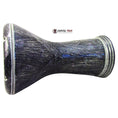









The Producer’s Guide to Recording Darbuka

31
Mar
The Darbuka is a sonic powerhouse, but its massive dynamic range makes it a "nightmare" for unprepared engineers. You have the high-frequency transients of the Tek (which can pierce a mix) and the sub-bass of the Doum (which can overwhelm a microphone).
To get that crisp, professional Egyptian studio sound, you need more than just a good drum—you need a strategy. Here is how to record your Darbuka like a pro.
1. The "Single-Mic" Starter Setup
If you only have one microphone (like the industry-standard Shure SM57), placement is everything.
-
The 45-Degree Rule: Position the mic 6 to 10 inches away from the head.
-
The Target: Point it at the rim, not the center. This captures the "snap" of the fingers while allowing the bass to bloom naturally in the air before it hits the capsule.
-
The Trap: Never point a single mic directly into the bottom of the drum. You’ll get a "woof" of air that sounds like a flat tire rather than a musical note.
2. The Gearspace "Pro" Setup: The Two-Mic Technique
For a truly "three-dimensional" sound that rivals professional Middle Eastern pop productions, you need to capture the top and bottom separately.
-
Top Mic (The Detail): Use a Small Diaphragm Condenser (like a Rode NT5 or Neumann KM184). Place it 8 inches from the head to capture the delicate finger-rolls and the "shimmer" of the skin.
-
Bottom Mic (The Body): Use a Large Diaphragm Dynamic mic (like an AKG D112 or Sennheiser MD421—often used for kick drums). Place it 6 inches away from the bottom opening. This captures the "Oomph" of the Doum.
3. The Secret Ingredient: The Phase Flip
This is the step that separates amateurs from pros. When you use two mics facing each other (one at the top, one at the bottom), their sound waves can sort of "cancel" each other out. This makes your drum sound thin and weak.
The Fix: In your recording software (DAW), experiment with the Phase (or Polarity) button on the bottom microphone track and flip it 180°.
-
The Result: Suddenly, the bass will "glue" together, and the drum will sound massive and centered.
4. Acoustic Environment: The "Rug" Advantage
Darbukas are bright. If you record in a room with bare walls, the "slap" of the drum will bounce back and create a "tinny" flutter echo.
-
Soften the Space: Record in a room with heavy curtains or bookshelves.
-
The Traditional Touch: Always place your drum (and the mic stands) on a thick rug. Not only does this look the part, but it also decouples the drum from the floor, preventing muddy low-end vibrations from traveling through the floorboards and into your mic stands.
Ready to Build Your Studio Centerpiece?
A great recording starts with a great instrument.
Browse our Professional Darbuka Collection and find the one that will elevate your recorded music to the next level!